The Islamic (Hijri) calendar is used by over 1.8 billion Muslims worldwide to mark every major act of worship — from Ramadan fasting to the Hajj pilgrimage. Yet most people have never stopped to ask: what do the month names actually mean?
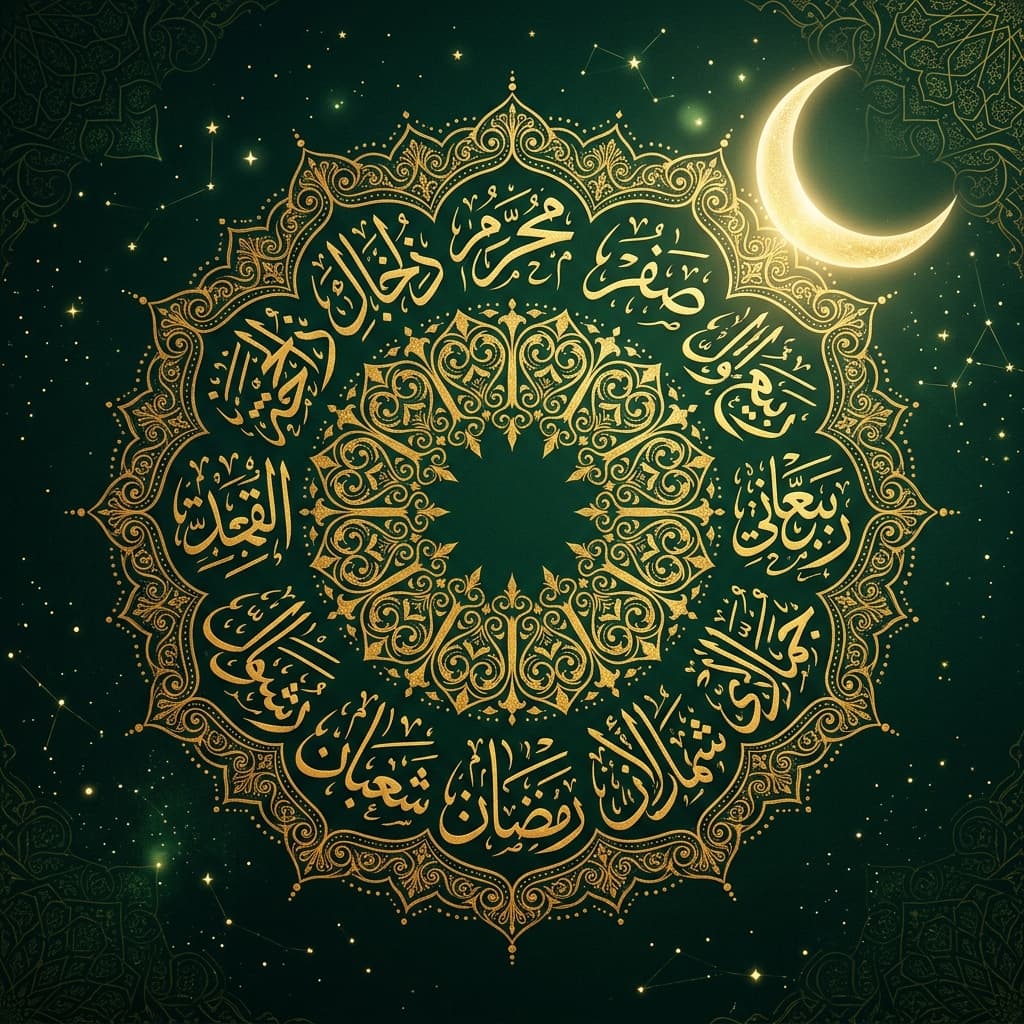
Each of the 12 months carries a name rooted in ancient Arabic, often describing the climate, customs, or spiritual character of that time of year. Understanding those meanings doesn't just satisfy curiosity — it deepens how you connect to the calendar itself.
Key Takeaways
- The Hijri calendar has 12 lunar months totalling 354–355 days, roughly 10–11 days shorter than the Gregorian year (Britannica).
- Four of the 12 months are considered sacred (Al-Ashhur Al-Hurum), mentioned explicitly in Quran 9:36.
- Because it's purely lunar, Islamic dates shift earlier each Gregorian year and cycle through all seasons over 33 years.
- The calendar's epoch is 622 CE, the year of the Prophet Muhammad's migration (Hijrah) from Mecca to Medina.
What Is the Islamic (Hijri) Calendar?
The Hijri calendar is a purely lunar system — no intercalary months, no solar corrections. Each month starts with the sighting of the new crescent moon (hilal), so each month is either 29 or 30 days long depending on astronomical conditions. The result is a year of 354 or 355 days, about 10–11 days shorter than the Gregorian year (timeanddate.com).
That shortfall matters. It means Ramadan doesn't land in the same Gregorian season every year. Over a 33-year cycle, Ramadan migrates through all four seasons — sometimes falling in winter's short days, sometimes in summer's long ones.
The calendar itself was formally established in 638 CE under Caliph Umar ibn al-Khattab, with year 1 AH anchored to the Prophet's migration from Mecca to Medina in 622 CE. That event — the Hijrah — is what gives the calendar its name.
The Four Sacred Months: Why They Matter
Before walking through each month, it helps to know that four of them hold a special status in Islamic law.
Surah At-Tawbah (9:36) states that among the 12 months, four are sacred. These are Muharram (1st), Rajab (7th), Dhu al-Qadah (11th), and Dhu al-Hijjah (12th). Three fall consecutively at the year's end; Rajab stands alone mid-year.
Historically, warfare was forbidden during these months across Arabia — even between rival tribes. The prohibition created safe windows for travel, trade, and pilgrimage to Mecca. That context is the reason several of the month names reference stillness, truce, or preparation.
All 12 Islamic Months — In Order
1. Muharram (المحرّم) — "The Forbidden"
The first month of the Islamic year, and one of the four sacred months. Its name comes from the Arabic root meaning "to forbid" or "to make sacred." Fighting was prohibited during Muharram, making it a month of restraint and reflection.
The most significant date is the 10th of Muharram — Ashura. For Sunni Muslims, fasting this day commemorates the day Allah saved Prophet Musa (Moses) from Pharaoh. For Shia Muslims, Ashura marks the martyrdom of Imam Hussein at the Battle of Karbala and is observed as a day of mourning (Middle East Eye).
2. Safar (صفر) — "Void" or "Empty"
The name Safar comes from the Arabic for "empty" or "void." Before Islam, this month followed immediately after the sacred Muharram — and once the restrictions on travel lifted, Arab families would leave their homes to journey for trade or food, leaving houses empty behind them.
Safar carries no specific obligatory rituals. Some pre-Islamic superstitions attached ill omens to this month, but Islamic tradition firmly rejects such beliefs.
3. Rabi' al-Awwal (ربيع الأوّل) — "The First Spring"
Rabi' means spring in Arabic, and this is its first installment. Historically, it marked the season when cattle returned to grazing pastures after the dry months.
For Muslims, Rabi' al-Awwal is most significant as the month of the birth of Prophet Muhammad (PBUH). Many Muslims across the world observe Mawlid al-Nabi — the Prophet's birthday — on the 12th of this month, with gatherings, prayers, and remembrance of his life.
4. Rabi' al-Thani (ربيع الثاني) — "The Second Spring"
Also called Rabi' al-Akhir ("the last spring"), this month marks the end of the spring season in classical Arabian reckoning. Like its predecessor, the name reflects the agricultural and pastoral rhythms of pre-Islamic Arabia.
There are no major obligatory observances in Rabi' al-Thani, though several Islamic scholars and saints have historically been associated with this month.
5. Jumada al-Awwal (جمادى الأولى) — "The First Dry Month"
Here the calendar moves into harsher territory. Jumada derives from an Arabic root meaning "to freeze" or "to become dry and parched." This month historically corresponded with the onset of cold, dry winter conditions in Arabia when water sources would freeze.
It's the first of two consecutive months carrying this name and character.
6. Jumada al-Thani (جمادى الآخرة) — "The Second Dry Month"
Also known as Jumada al-Akhirah, this month signals the tail end of the cold, arid season. After this month, the year moves toward spring — and eventually toward the holier months ahead.
Like Jumada al-Awwal, this month has no specific obligatory acts of worship attached to it.
7. Rajab (رجب) — "Respect" or "Honor"
Rajab is the second of the four sacred months and the only one that stands alone — not grouped with the three consecutive sacred months at year's end. Its name comes from an Arabic root meaning to honor or revere.
The most significant event associated with Rajab is Al-Isra wal-Miraj — the Night Journey of the Prophet Muhammad (PBUH). On this night, the Prophet was transported from Mecca to Jerusalem (Al-Isra) and then ascended through the heavens (Al-Miraj), during which the five daily prayers were prescribed for Muslims.
8. Sha'ban (شعبان) — "Scattered" or "Dispersed"
The name Sha'ban comes from an Arabic root meaning to scatter or spread out. Arab tribes would traditionally disperse during this month to find water before the heat of summer intensified.
Sha'ban is the direct prelude to Ramadan. The Prophet Muhammad (PBUH) was known to fast more in Sha'ban than in any month other than Ramadan itself, using it as spiritual preparation. The 15th night of Sha'ban (Laylat al-Bara'ah) is observed as a night of prayer and seeking forgiveness in many Muslim traditions.
9. Ramadan (رمضان) — "Intense Heat" or "Scorching"
The ninth and most well-known month. The name Ramadan is believed to derive from an Arabic root meaning intense heat or scorching — likely reflecting the season in which this month originally fell before the lunar calendar detached from solar seasons.
Ramadan is the holiest month of the Islamic year. Muslims fast from Fajr (dawn) to Maghrib (sunset) every day of the month, abstaining from food, drink, and other specified things. The Quran was first revealed during this month, and the last 10 nights contain Laylat al-Qadr — the Night of Power — widely believed to fall on the 27th night, and considered better than a thousand months of worship.
10. Shawwal (شوّال) — "Raised" or "Uplifted"
Shawwal comes from an Arabic root meaning to lift or carry. It marks the end of Ramadan's fasting and opens with Eid al-Fitr — one of Islam's two major celebrations.
Beyond Eid, Shawwal offers a specific voluntary opportunity: fasting any six days during this month is said to carry the reward of fasting the entire year, based on a hadith of the Prophet (PBUH). It's a month where spiritual momentum from Ramadan can be extended rather than abandoned.
11. Dhu al-Qadah (ذو القعدة) — "The Month of Truce" or "Resting"
The name means "the one of sitting still" — derived from the Arabic root for resting or abstaining from movement. This is the third sacred month and historically marked a period of ceasefire and stillness across Arabia.
Practically, Dhu al-Qadah serves as the preparation month for Hajj. Pilgrims who intend to perform Hajj begin their travel and logistics during this time, arriving in Mecca before the rites formally begin in Dhu al-Hijjah.
12. Dhu al-Hijjah (ذو الحجّة) — "The Month of Pilgrimage"
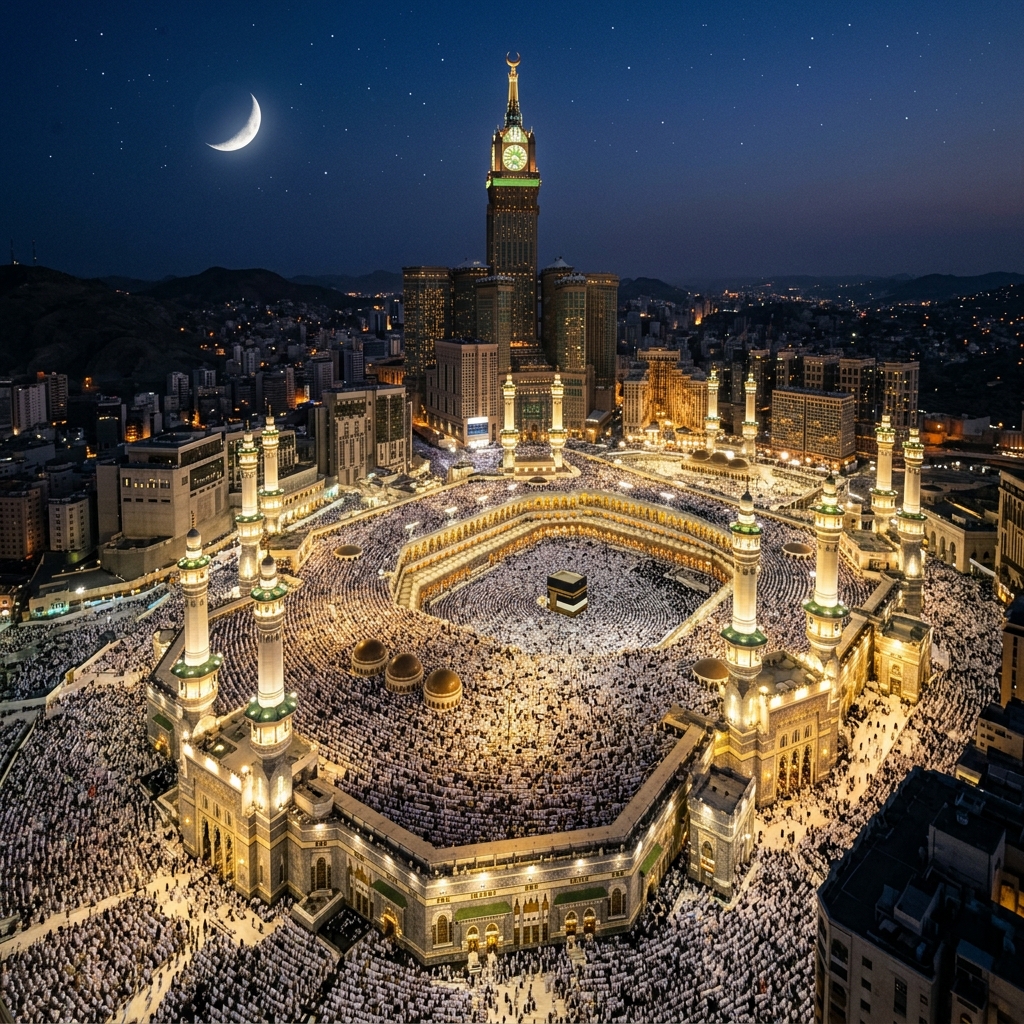
The final month of the Islamic year and the fourth sacred month. Its name translates directly as "the one of the Hajj" — there's no ambiguity here.
The first 10 days of Dhu al-Hijjah are considered among the most blessed days of the entire year. Key dates include:
- 8th–13th: The Hajj pilgrimage rites, which draw millions of Muslims to Mecca each year.
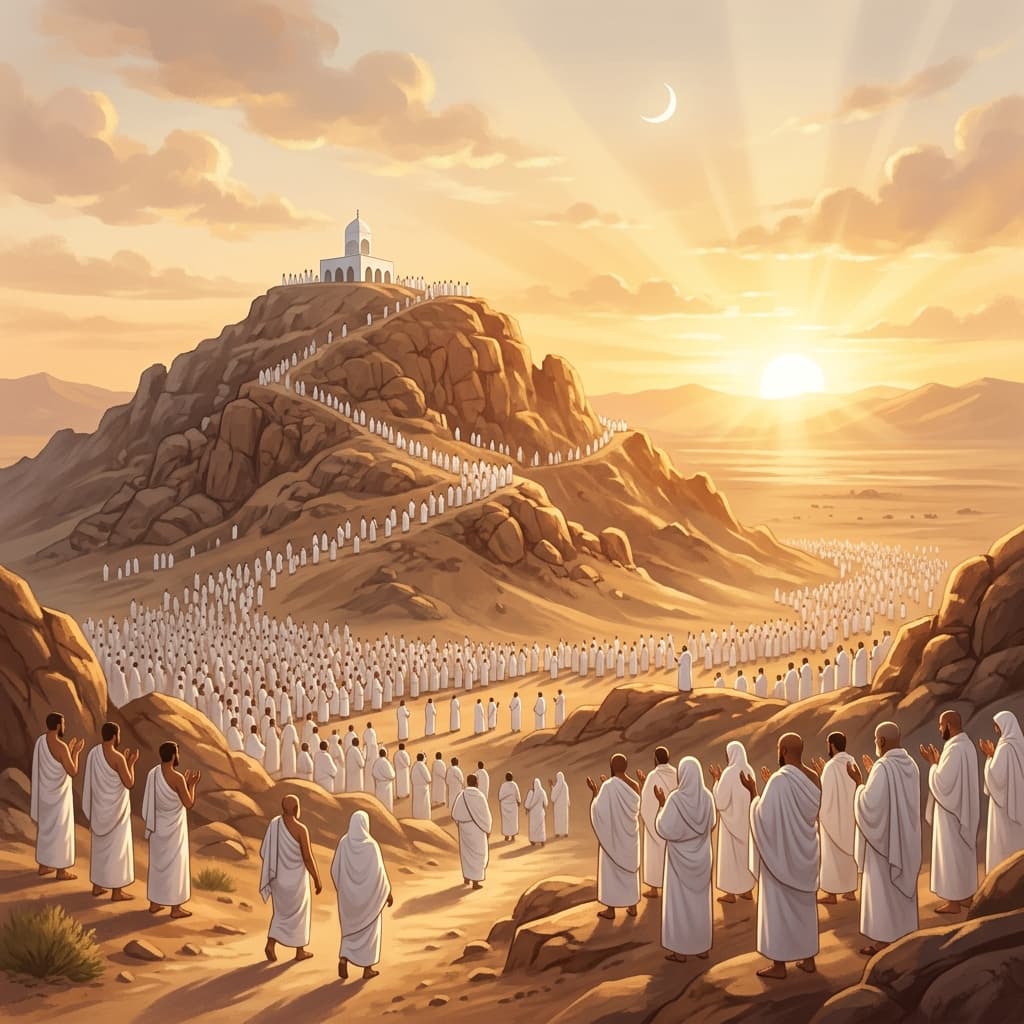
- 9th (Day of Arafah): The spiritual pinnacle of Hajj. For non-pilgrims, fasting this day is said to expiate sins of the previous and coming year (alim.org).
- 10th (Eid al-Adha): The Festival of Sacrifice, commemorating Ibrahim's (AS) willingness to sacrifice his son.
Quick Reference: All 12 Months at a Glance
| # | Month | Arabic | Meaning | Sacred? |
|---|---|---|---|---|
| 1 | Muharram | المحرّم | The Forbidden | ✅ |
| 2 | Safar | صفر | Void / Empty | — |
| 3 | Rabi' al-Awwal | ربيع الأوّل | The First Spring | — |
| 4 | Rabi' al-Thani | ربيع الثاني | The Second Spring | — |
| 5 | Jumada al-Awwal | جمادى الأولى | First Dry Month | — |
| 6 | Jumada al-Thani | جمادى الآخرة | Second Dry Month | — |
| 7 | Rajab | رجب | Respect / Honor | ✅ |
| 8 | Sha'ban | شعبان | Scattered / Dispersed | — |
| 9 | Ramadan | رمضان | Intense Heat | — |
| 10 | Shawwal | شوّال | Uplifted / Raised | — |
| 11 | Dhu al-Qadah | ذو القعدة | Month of Truce | ✅ |
| 12 | Dhu al-Hijjah | ذو الحجّة | Month of Pilgrimage | ✅ |
Frequently Asked Questions
Why is the Hijri year shorter than the Gregorian year?
The Islamic calendar is purely lunar, with no correction mechanism to align it with the solar year. Each year is 354–355 days, making it about 10–11 days shorter than the 365-day Gregorian year (Islamic Relief). That's why Ramadan, Eid, and Hajj shift earlier each year on the Gregorian calendar, cycling through all seasons over a 33-year period.
When did the Islamic calendar start?
The Hijri calendar begins at year 1 AH, anchored to the Prophet Muhammad's migration from Mecca to Medina in 622 CE. The formal calendar system was established by Caliph Umar ibn al-Khattab in 638 CE. The current year (as of May 2026) is 1447 AH.
What are the four sacred months in Islam?
They are Muharram (1st), Rajab (7th), Dhu al-Qadah (11th), and Dhu al-Hijjah (12th). Three fall consecutively at the end of the year; Rajab stands alone in the middle. During these months, warfare was historically forbidden and acts of worship carry extra weight.
Why does Ramadan fall in different seasons each year?
Because the Islamic calendar is lunar and doesn't add leap months to sync with the solar year, each Hijri month drifts approximately 10–11 days earlier in the Gregorian calendar annually. Over 33 years, Ramadan completes a full cycle through all seasons.
What is the significance of the Day of Arafah?
The Day of Arafah falls on the 9th of Dhu al-Hijjah. It's the central rite of Hajj, when pilgrims gather on the plain of Arafah in prayer. For Muslims not performing Hajj, fasting on this day is strongly recommended and believed to expiate sins of the previous and coming year.
Sources: Britannica · Wikipedia – Islamic Calendar · timeanddate.com · Middle East Eye · Islamic Relief USA
Ready to outrank your competition?
We help Nepali businesses build high-converting websites and dominant SEO strategies tailored for the local market.
Last updated: May 20, 2026